
Choosing Materials for Landscaping in the UAE: Creating Predictable and Timeless Gardens
It’s a quiet weekend morning. You open the curtains to your garden, noticing what has changed since the last time you walked these paths. Perhaps a new pattern in the paving catches your eye, or the light hits a limestone wall just right. One corner calls you to linger with a cup of coffee, while another reminds you of an evening spent with friends by the pool. Even before the day begins, the garden is quietly performing: functional, inviting, and beautifully calm.
Gardens in Dubai don’t happen by accident. Every material — from paving to structural elements — must balance aesthetic refinement with climate realities. Sun, heat, humidity, and predictable performance are all critical considerations. Over the years, I’ve found certain materials consistently perform beautifully, while others require selective use, and some I avoid altogether.
Why Material Selection Matters in the UAE
Selecting materials for a garden here is about more than looks. In a climate where the sun is relentless, surfaces heat rapidly, and humidity fluctuates, your choices define comfort, longevity, and usability.
When I consider a material, I ask:
Predictability: Will it behave consistently in heat, sun, and occasional rain?
Durability: Will it last without constant maintenance or replacement?
Design integration: Does it support a contemporary, refined aesthetic without introducing unpredictability?
With these principles in mind, here are the materials I most often trust in my gardens — and those I use selectively or avoid.
Materials That Perform Beautifully in UAE Gardens
Porcelain Paving
Porcelain tiles are a versatile, durable, and low-maintenance choice for patios, walkways, and poolside areas.
Advantages:
Heat-resistant: Porcelain remains cooler underfoot than many natural stones.
Low maintenance: Resistant to staining, fading, and moisture.
Aesthetic versatility: Available in a wide range of colors, sizes, and finishes suitable for modern and contemporary designs.
Considerations:
Ensure tiles are rated for outdoor use and slip-resistant for safety near wet areas.


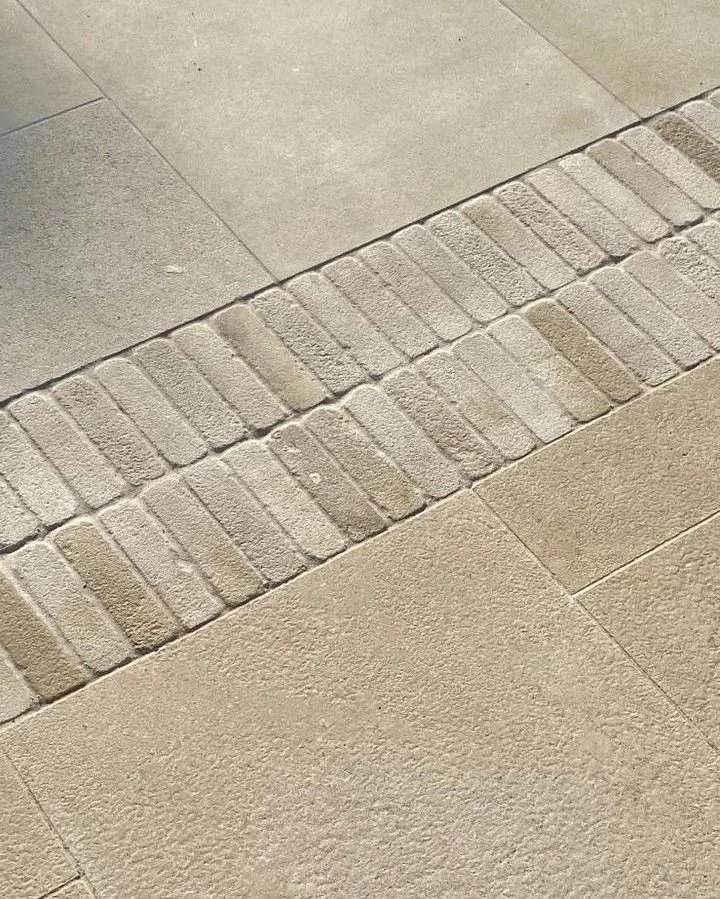
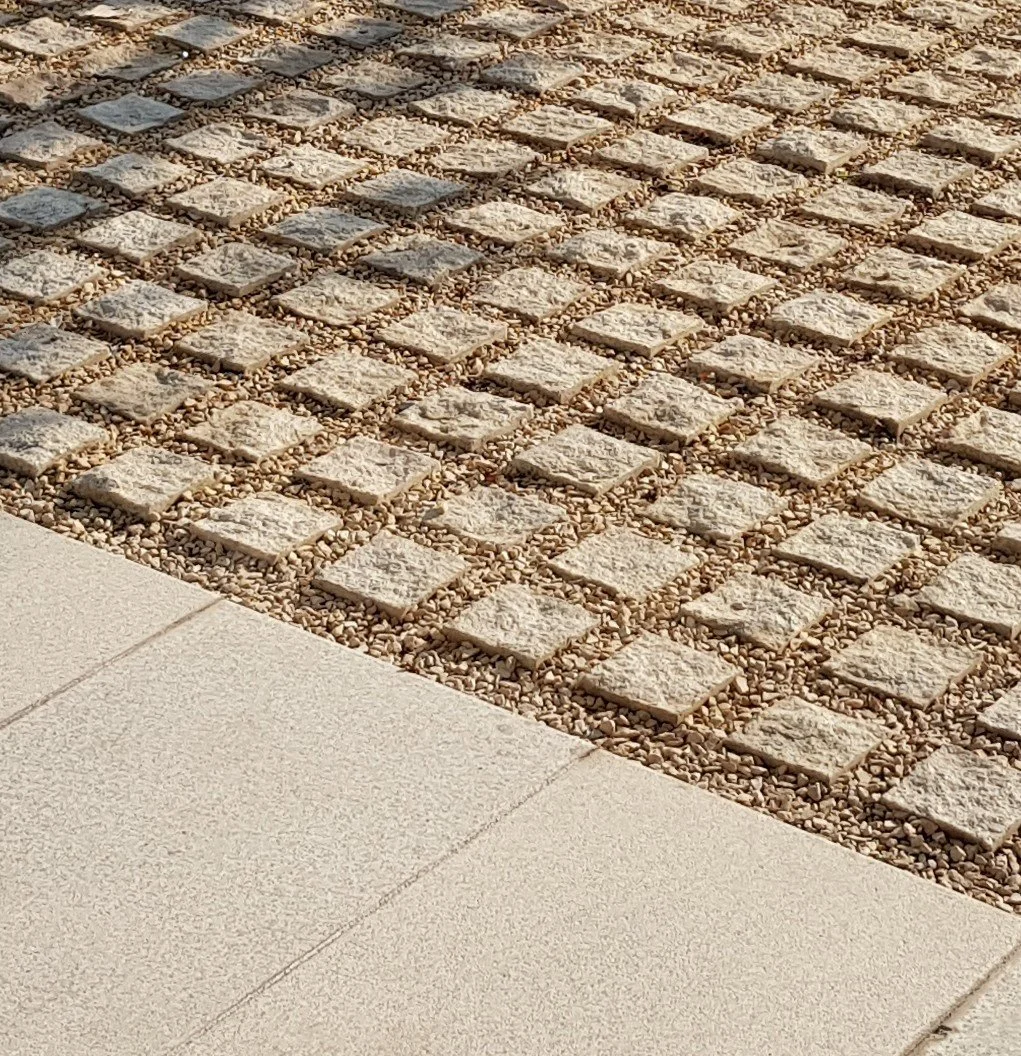
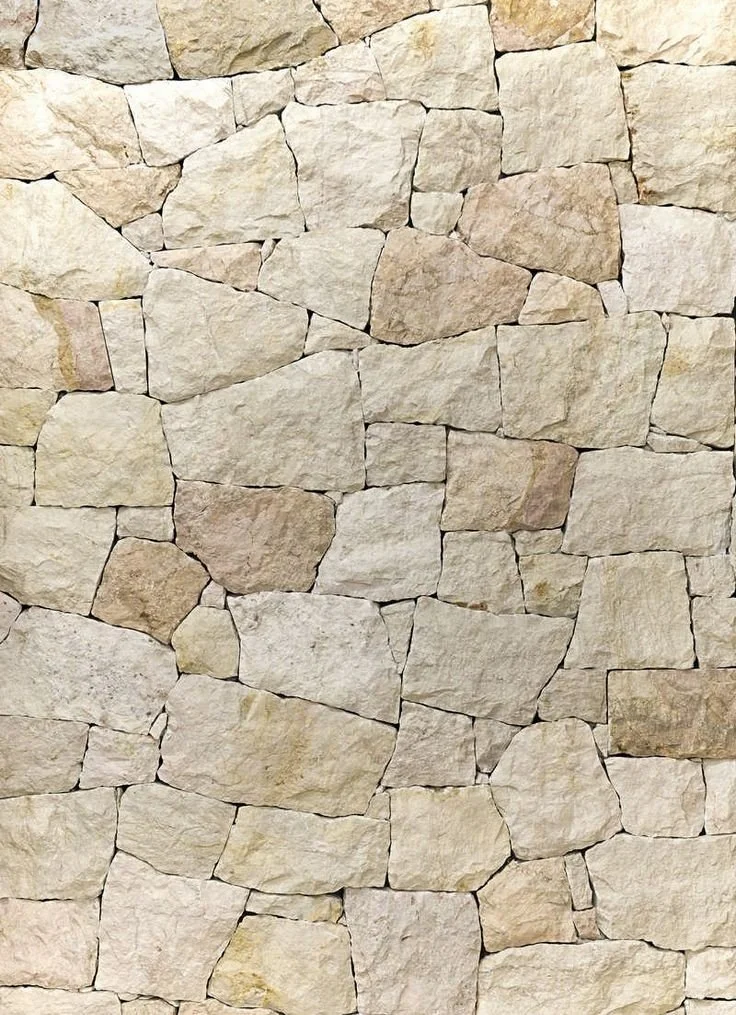
Natural Stone: UAE Limestone, Travertine, Granite Setts and occasionally Sandstone
Natural stone adds depth, character, and a connection to the region. Locally sourced UAE limestone is particularly versatile. Travertine is occasionally used for lighter, softer tones, while sandstone appears rarely for specific design effects. Granite setts — small, robust blocks — are excellent for pathways, paving, and subtle design accents.
Applications & Formats:
Large-format paving (limestone/travertine)
Wall cladding (large and small format)
Stepping stones, battens, and cobblestones
Granite setts for pathways, zones, or subtle patterning
Sculptural boulders
Advantages:
Natural texture and soft tones integrate seamlessly with planting and hardscape.
Granite setts provide durability and visual rhythm, ideal for contemporary layouts.
Connects the garden to local heritage and architecture.
Considerations:
Slabs vary in thickness; installation requires precision.
Sealants for high-use areas like BBQ zones can alter colour.
Higher cost and longer installation time than porcelain.
Granite setts are best used selectively, rather than covering large areas.
Sandy-Coloured Beige Gravel
A practical, reflective, and low-maintenance option. Gravel works beautifully for pathways and open areas.
Advantages:
Reflects sunlight, keeping surfaces cooler.
Allows good drainage, reducing puddling.
Minimal maintenance; easily replenished.
Considerations:
Base must be prepared properly to prevent shifting under foot traffic.
Hoggin (Crushed, Compacted Gravel)
Hoggin — a compacted mixture of gravel, sand, and clay — is ideal for a natural, permeable surface.
Advantages:
Eco-friendly and sustainable.
Cool underfoot, even in the heat.
Allows water to permeate naturally.
Considerations:
Must be compacted properly for stability and longevity.
Architectural and Structural Materials
Timber
Timber adds warmth and texture, particularly for decking, screens, or custom garden features.
Advantages:
Kiln-dried timber resists moisture, warping, and splitting.
Natural aesthetic that complements contemporary landscaping.
Considerations:
Requires ongoing maintenance.
Untreated or poorly maintained timber can degrade in heat and humidity.
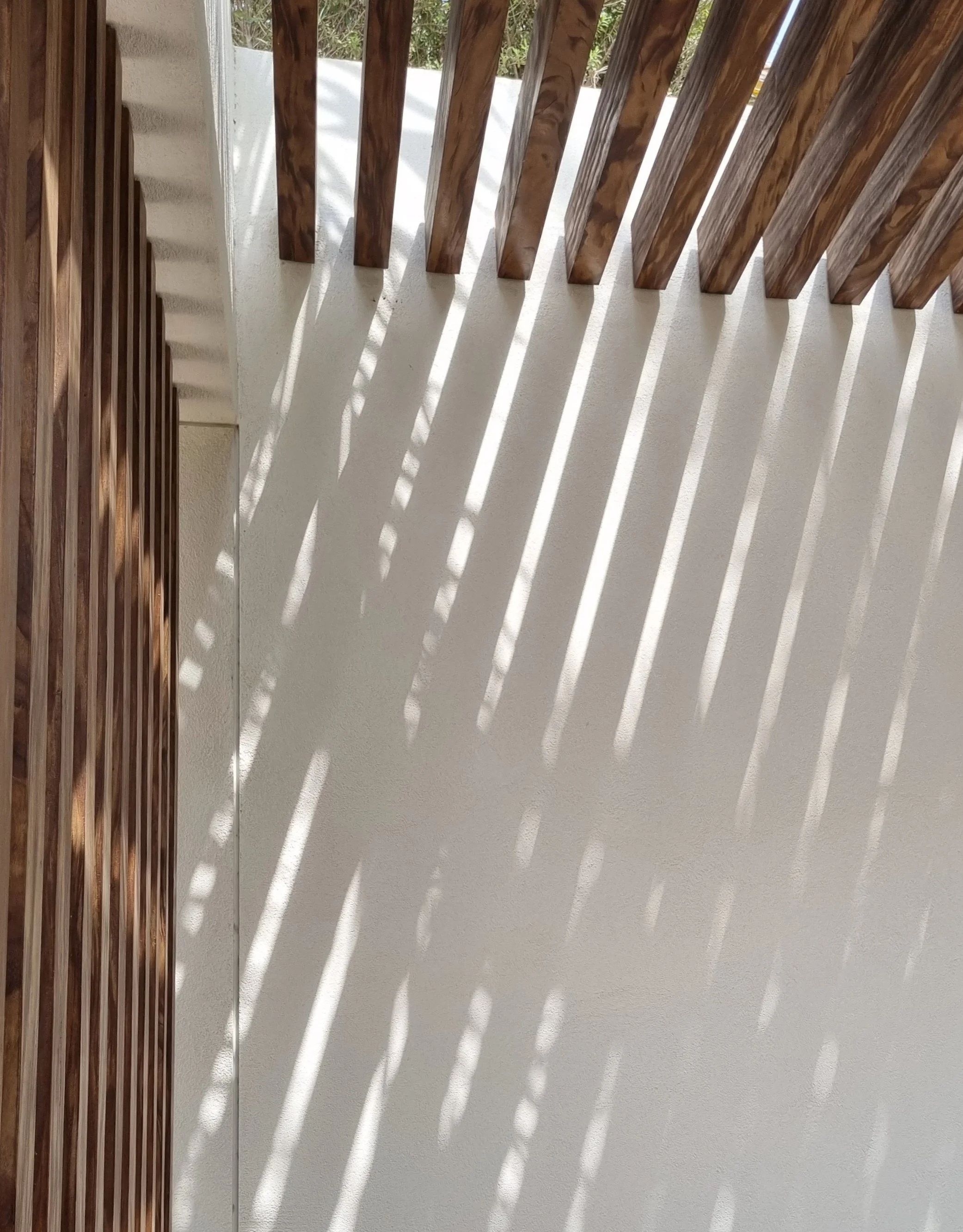
Contemporary vertical and horizontal timber slats creating engaging shadow play at the entrance to a villa
Aluminium
Aluminium structures are increasingly the material of choice for pergolas, gates, and storage in UAE gardens.
Advantages:
Extremely durable and low-maintenance.
Predictable performance in extreme heat, humidity, and sun.
Design nuance:
Historically, aluminium structures often looked generic.
Thoughtful design can elevate aluminium, giving sleek, original forms that integrate with the garden and feel intentional rather than functional only.
Occasionally Used Materials
Concrete Pavers
Concrete pavers can work in principle, but they come with practical limitations in the UAE.
Challenges:
Suppliers often provide large minimum quantities → excess waste.
Can stain from fallen fruit, seeds, grease, or food/drinks.
Less suitable for refined, contemporary garden designs.
When they work:
In less trafficked areas or when smaller quantities are available.
For temporary or transitional zones where aesthetic perfection is less critical.
Materials to Avoid
Artificial Lawn, Plastic Decking, Dark Gravels, Black & White Pebbles
Why:
Artificial turf: extreme heat (60–80°C under direct sun), microplastic pollution, non-recyclable, prevents natural water infiltration, and visual degradation over time.
Plastic decking: absorbs heat, low longevity, environmental concerns.
Dark gravels / black or white pebbles: heat absorption and glare make outdoor areas uncomfortable.
For gardens intended to feel calm, natural, and enduring, these materials rarely support the vision.
Choosing the right hard landscaping is about more than performance — it’s about creating a refined, enduring garden that works beautifully in the UAE climate. It’s not about using every material available, but thoughtfully selecting two or three that suit your space, lifestyle, and aesthetic. From textured porcelain pavers to limestone walls, these choices provide a solid foundation for everyday life, whether that’s morning coffees, children playing, or evening gatherings with friends. And while hard landscaping forms the garden’s structure and function, planting and ground covers bring softness, atmosphere, and life — a topic I explore further in my planting guide.
Selecting materials in the UAE is not about following trends; it is about balancing aesthetics, climate, and longevity. When done thoughtfully, your garden quietly supports daily life — morning coffees, children playing, evening gatherings, and moments of reflection — year after year.
Hard landscaping forms the permanent skeleton of the garden, providing both structure and function. Planting and ground covers then bring softness, atmosphere, and life — a topic I explore further in another blog post about planting