
Small Gardens, Big Impact: Why Intentional Design Makes All the Difference
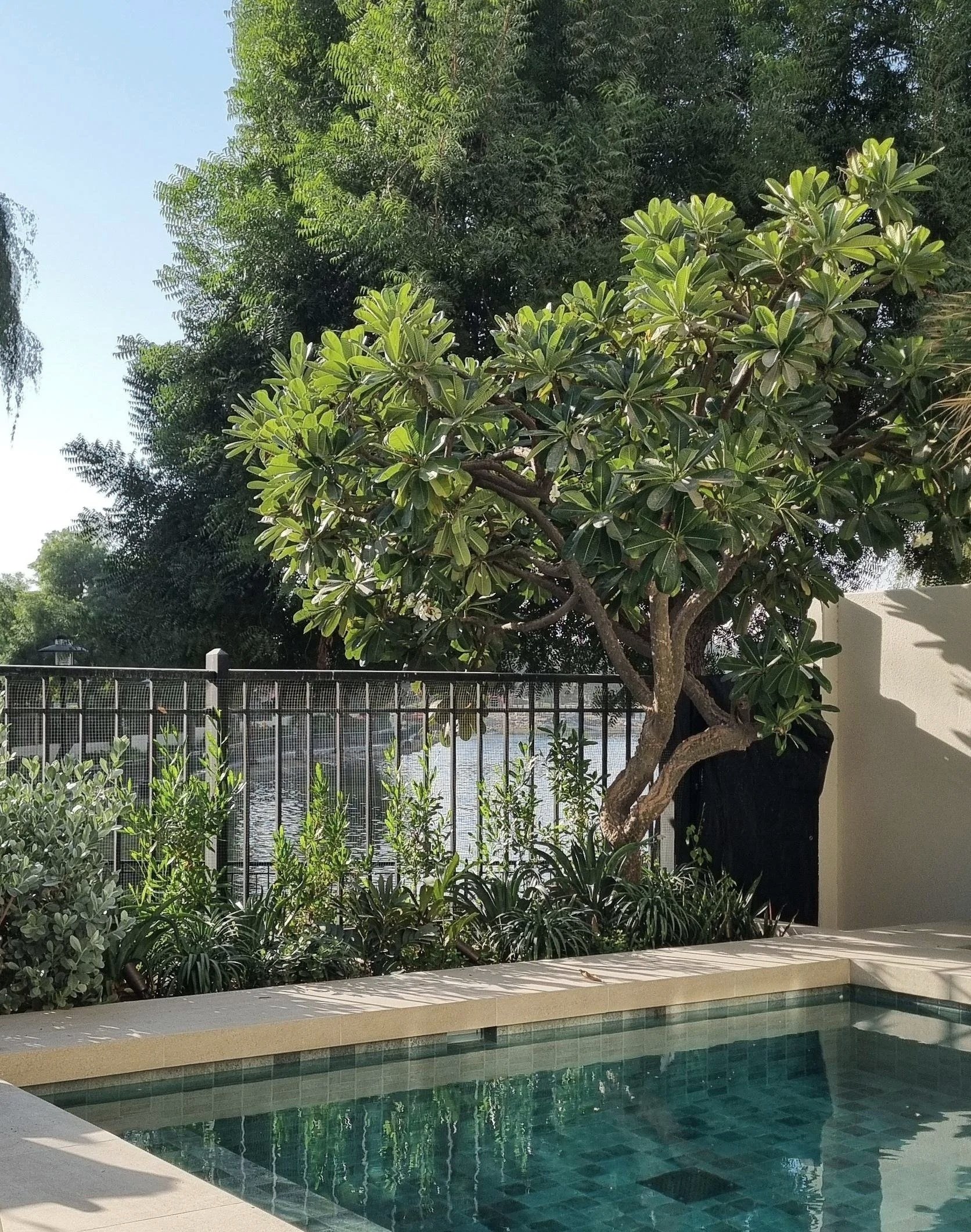
How thoughtful layout, spatial rhythm, and restraint create calm and clarity in compact outdoor spaces.
Small gardens demand a higher level of design discipline than larger landscapes. When space is limited, every element is immediately visible and every decision has a greater impact on how the garden feels. In my work, I often see homeowners focus on what they want to include — more seating, more planting, more features — when the real question should be how the space is structured. In compact gardens, the difference between calm and chaos is rarely about the number of plants; it’s about the clarity of the layout.
Layout precedes planting. How elements are arranged determines whether a small garden feels calm or chaotic.
Layout Comes Before Everything Else
Many small garden guides default to plant lists or climbers, which can work in temperate climates, but in the UAE, small-space design is less about what goes in the garden and more about where things go and why. A strong layout defines spatial logic, showing where you move, pause, sit, or look from. It establishes flow and sequence, allowing even a tiny space to feel larger if the eye is guided intelligently. Negative space — areas without furniture or features — is never wasted; it gives emphasis and breathing room to what you choose to include.
Why Small Gardens So Often Feel Cluttered
A common mistake is trying to fit too much in. Many homeowners treat a small garden like a buffet: “Might as well try everything!” The result is visual clutter, competing focal points, and a space that feels busy rather than restful. Choosing a clear purpose for each zone is critical. If a space is meant for sitting, the geometry of that zone should support that function without distraction.
Another frequent challenge is underestimating the power of negative space. Empty space is not blank; it is visual breathing room. A garden that is too busy may contain more features, but it instantly feels smaller, noisier, and less settled. Deliberate gaps let shapes and materials read clearly, amplifying whatever is present.
Cluttered composition creates a cluttered experience. Small spaces are unforgiving — a disorganized layout combined with too many visual elements can feel stressful. Establishing hierarchy and simplicity, even in a tiny garden, ensures that primary focal elements stand out and everything else supports rather than competes.
In a small garden, what you leave out is just as important as what you include.
The Discipline of “Less is More”
Trying to include every feature you want — full seating, a dining area, sculptural elements, multiple plantings — often leads to visual clutter. In compact gardens, restraint feels intentional and refined. Prioritise one dominant function for the garden, whether lounging, dining, or entertaining. Any secondary function should be scaled down — a small bistro table can complement a seating area without overwhelming the space. Sometimes leaving an open corner, a simple path, or a stretch of paving without planting is more impactful than trying to fit everything in.
Restful small gardens rely on balance. Pair your primary focal point with supporting elements that echo scale or texture, while leaving generous stretches of open paving, gravel, or carefully selected planting areas that frame rather than crowd. Light and shadow, especially in the UAE, can be as effective as any physical object in creating atmospheres of calm and dimension.
Designing for Calm, Not Clutter
Even in compact spaces, movement and circulation are key. Consider where you enter the garden and how your eye travels through it. Clear paths and defined zones create perceived spaciousness. Zones should feel intentional; a seating area, a circulation path, or a visual anchor should be deliberate rather than squeezed in. Scale and proportion are critical — oversized furniture, heavy hardscape, or messy planting shapes can make the garden feel cramped. Thoughtful placement of shade structures, screens, and surfaces that catch light adds depth and dimension without clutter.
Many small garden guides focus on plant lists, containers, or climbing solutions. While these can be useful elsewhere, in the UAE the priority is compositional clarity. Plants support movement, hierarchy, colour, and rhythm, but they are never the starting point.
Why Spatial Discipline Matters
The most successful small gardens are not the ones that contain the most features, but the ones where every element has been carefully considered and given space to breathe. Clear layout, balanced proportions, and a willingness to leave some areas intentionally quiet allow the garden to feel calm and resolved.
This is often why smaller gardens benefit from thoughtful design input — there is simply less room for trial and error. Ultimately, good small garden design is not about filling every corner. It’s about understanding the space well enough to know what truly belongs there — and having the discipline to leave the rest out.