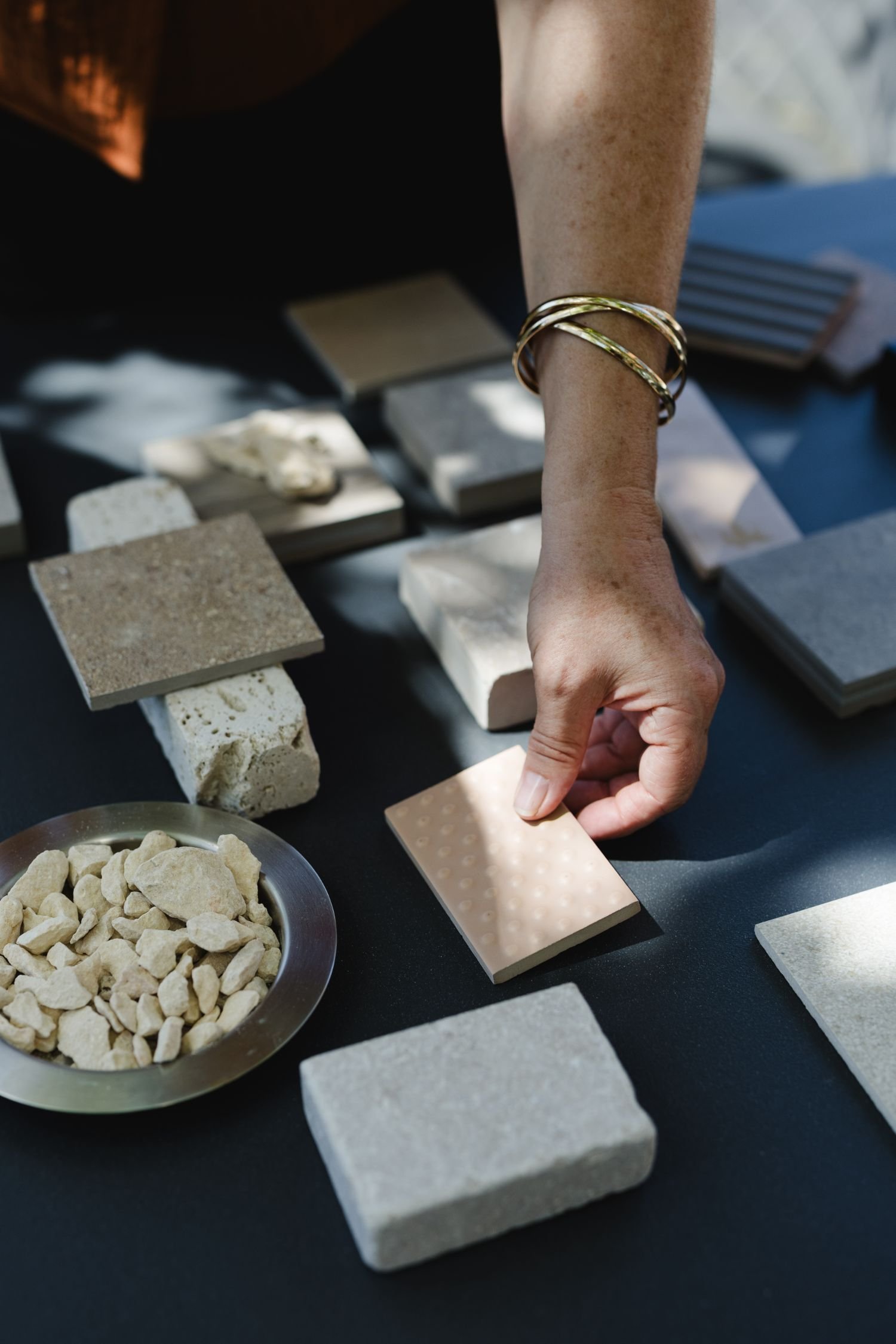
The foundation of a successful garden: Designing space before details
Every homeowner wants a garden that looks beautiful, but the gardens that truly succeed are the ones that feel beautiful too, day after day, season after season. That difference rarely comes down to the features chosen. It comes down to how the space was designed in the first place.
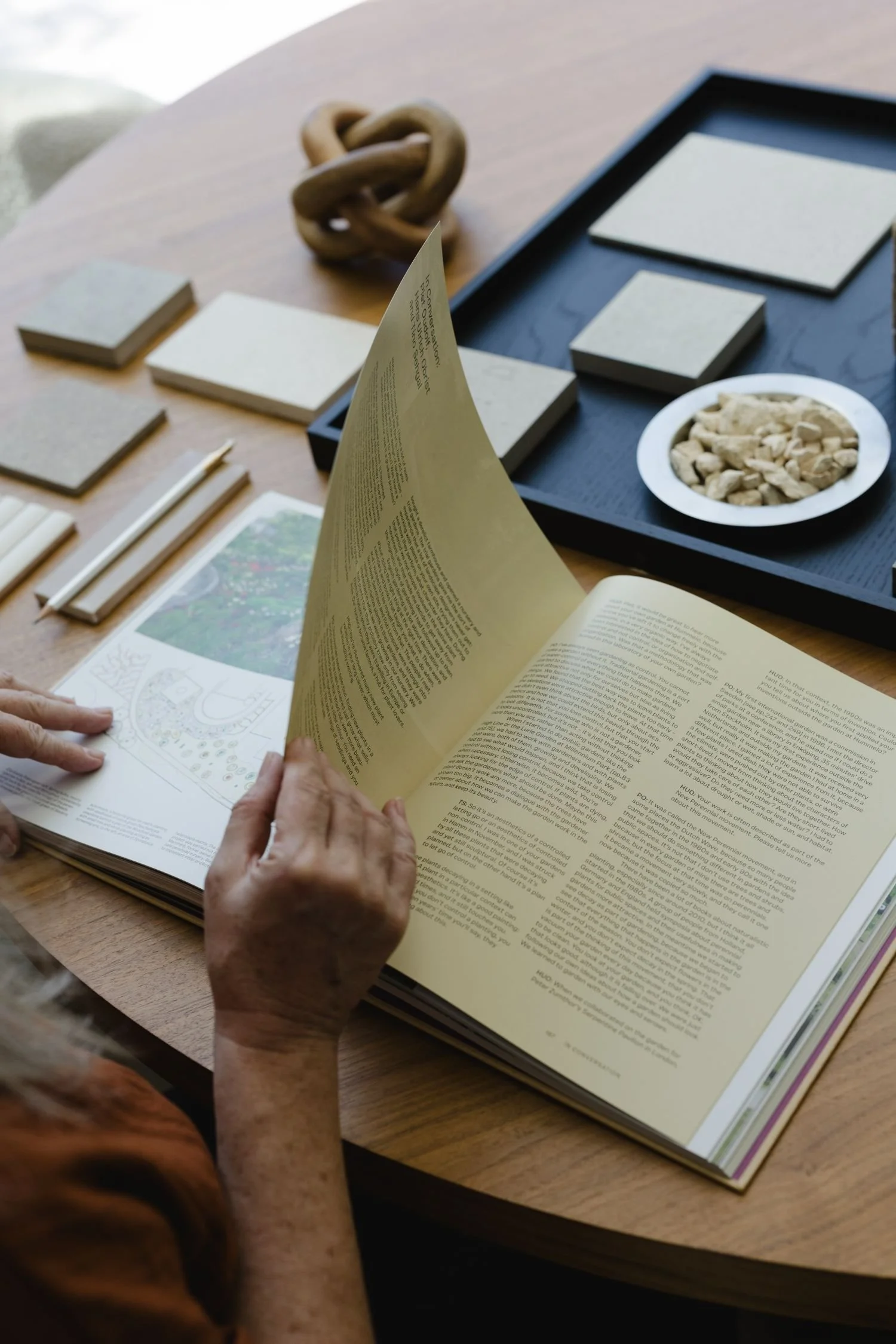
Looking through inspiring garden books
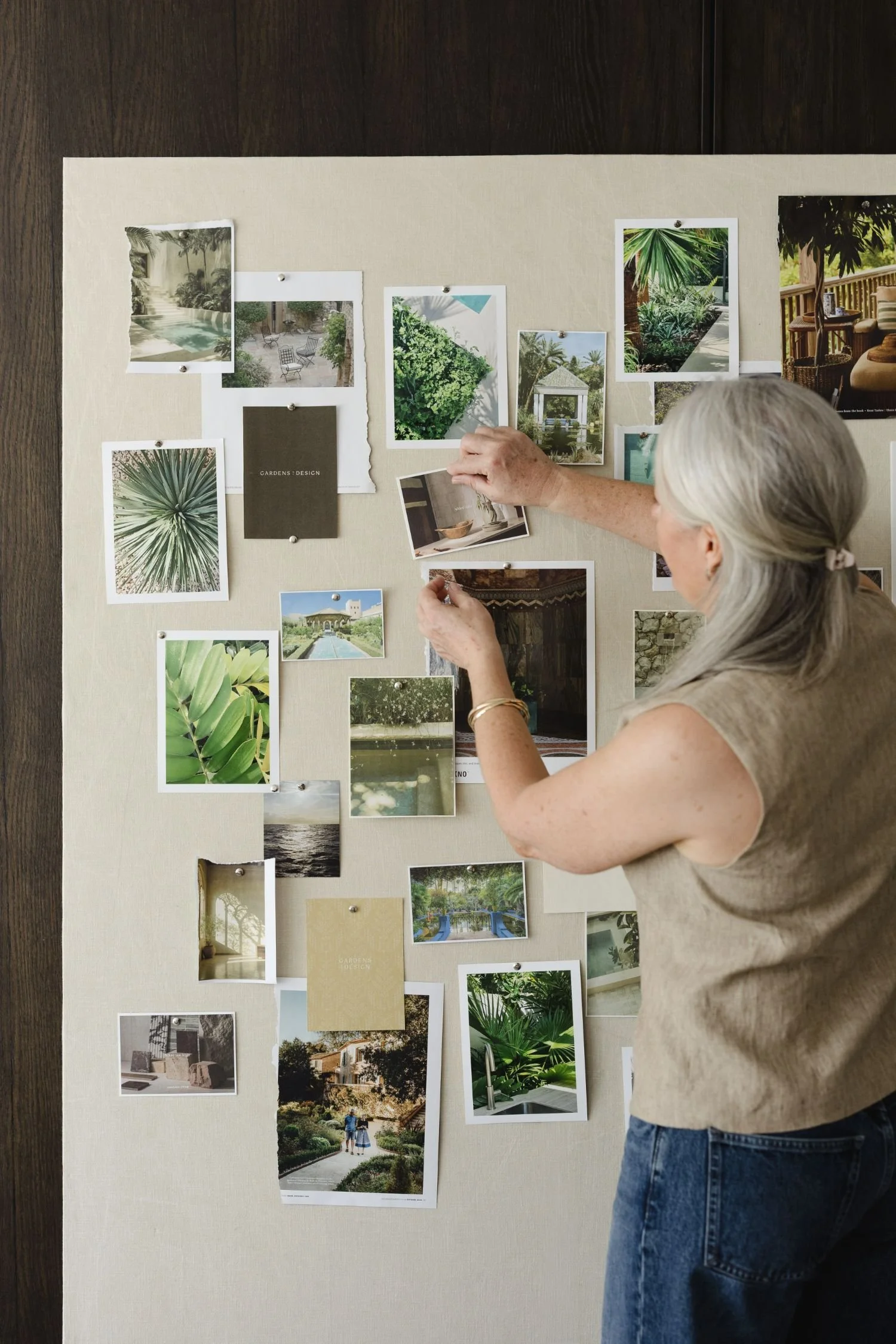
Tanja pins inspiration to a studio pinboard
Why great gardens begin with structure, not decoration
A successful garden is not created by selecting attractive elements and placing them together. It begins with understanding the space itself. Before materials, planting or garden features are considered, a designer must first understand how the garden will be experienced: how people move through it, where they gather, how the architecture connects with the landscape and how the space will function over time.
A garden is not defined by individual elements alone. Its success comes from the relationship between those elements, the balance between structure and softness, openness and privacy, movement and stillness. This is the difference between decoration and design. Decoration adds elements to a space, whereas design considers how those elements relate, perform and contribute to the overall experience.
In Dubai, this understanding becomes even more important. Gardens must respond to intense sunlight, high temperatures, privacy requirements, seasonal patterns of outdoor living and the relationship between architecture and landscape. A garden that looks beautiful in a photograph should feel equally successful when it is lived in every day. The most memorable gardens are not simply filled with attractive features. They are carefully composed environments designed around the way people live.
The garden begins with experience
When homeowners imagine a new garden, it is natural to focus first on what they can see: a terrace, a pool, a pergola, a feature wall, a planting scheme. Yet before considering individual components, the most important questions are about experience. How should the garden feel when you arrive? Where should the eye naturally travel? Where will people gather? Where is shade most valuable? How do indoor and outdoor spaces connect? What moments should the garden create throughout the day?
These decisions form the foundation of the design. A considered garden does more than provide outdoor space. It creates a sequence of experiences that feel natural, effortless and connected.
Designing relationships, not objects
A garden is not a collection of separate features placed within a boundary. Every decision influences the next: the relationship between the house and the landscape, between hard surfaces and softer elements, between privacy and openness, between movement and moments of pause.
This is where design thinking becomes essential. A pathway is not simply a route from one place to another, it influences arrival, movement and discovery. A boundary is not simply a wall, it shapes privacy, views and atmosphere. A seating area is not simply furniture placed outdoors, and its success depends on orientation, comfort, shade and its relationship with the surrounding space. Good design considers the whole rather than the individual parts.
Why space planning matters in Dubai
Space planning is particularly important in UAE gardens because outdoor spaces must respond to conditions that are very different from many other climates. A garden is not simply a decorative extension of the home. It must be designed around sunlight, heat, privacy and the realities of outdoor living in the region.
A successful Dubai garden considers where shade is created and when it is most valuable, how outdoor spaces connect with the architecture, how circulation works throughout the year, how privacy is achieved without making spaces feel enclosed, and how materials and planting respond to the local environment.
Residential plots often have defined boundaries and multiple competing requirements. A garden may need to provide entertaining areas, create privacy, introduce greenery and accommodate existing architecture, while still feeling open, balanced and connected. Every square metre has a purpose.
Without careful planning, gardens can quickly become a collection of disconnected features: a seating area that is rarely used, a pathway that feels unnecessary, a feature that attracts attention but adds little value, a layout that looks impressive in a rendering but does not support everyday life. Thoughtful design considers not only how a garden looks, but how it will be experienced.
From concept to detail
A successful garden begins by understanding the wider picture before refining the details.
Understanding the site: Every garden has its own opportunities and constraints. Orientation, existing architecture, views, privacy, access, climate conditions and the character of the surrounding landscape all influence the design approach.
Creating the structure: The overall framework of the garden is established: how spaces connect, where movement occurs, where people gather and how different areas relate to one another. This is where the garden begins to take shape.
Refining the details: Once the structure is resolved, materials, planting, lighting and architectural details can be selected with purpose. Each element becomes part of a wider composition rather than an isolated choice. A well-designed garden does not happen by accident. It develops through a sequence of intentional decisions.
Designing for longevity
A garden should not only look beautiful when newly completed. It should continue to feel appropriate and functional years later. This requires considering how spaces will mature, how materials will age, how people will use the garden over time and how the design responds to changing needs.
The strongest gardens are not created by adding more. They are created through careful editing. Knowing what the garden needs, and equally, what it does not, is a fundamental part of good design.
Why design comes first
Professional garden design is not simply about creating a beautiful image. It is about resolving the relationship between space, architecture, materials, climate and lifestyle. Every decision builds upon the one before it, and when the underlying structure is right, the details begin to feel inevitable rather than decorative.
A considered design approach helps avoid costly compromises and ensures that each decision contributes to the overall experience of the garden. The goal is not to create a garden that simply looks impressive. It is to create one that feels natural, effortless and entirely at home within its surroundings.
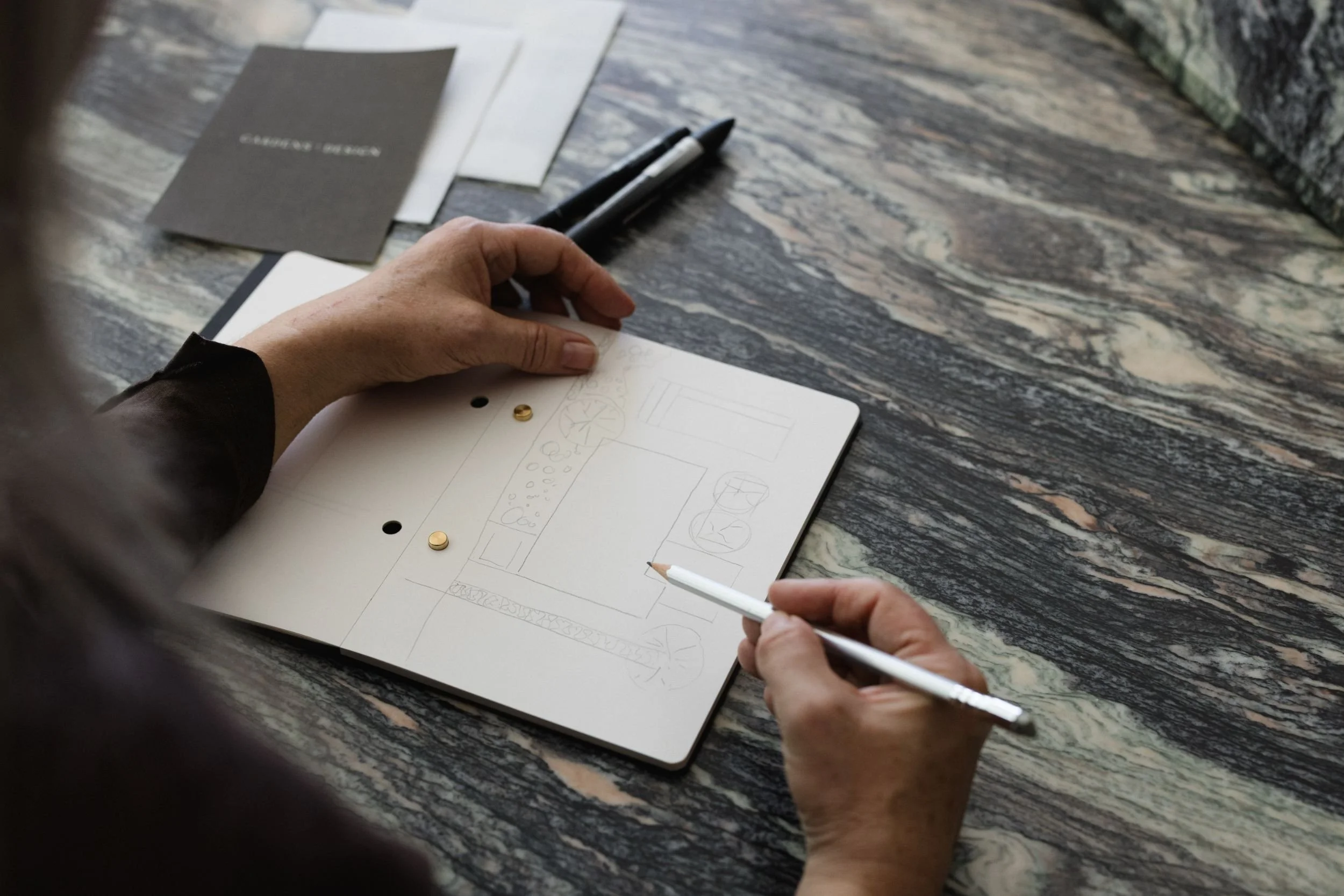
Tanja sketches out zone ideas in a sketchbook
A final thought on designing gardens
The most enduring gardens are not successful because every individual element is remarkable. They are successful because every element has a reason for being there. Space creates the foundation, and detail creates atmosphere. Together, they form a garden that feels balanced, intentional and enduring.
A thoughtfully designed garden does not thrive by chance. It is the result of hundreds of considered decisions, beginning not with decoration, but with space.
About Gardens by Design
Elegant gardens for Dubai's most considered homes, shaped by climate, designed with intent and refined in every detail.
Gardens by Design is a garden design studio based in Motorcity in Dubai, working with residential home owners who want gardens that thrive and establish in the UAE climate. The studio is led by Tanja Boehm, who has designed over 130 gardens in Dubai over the last decade. As a studio who specialise in creating beautiful outside spaces, our goal is to ensure gardens offer shade, privacy and are designed around how homeowners live. If you've just been reading about the difference between decoration and design and you're wondering whether your own garden has the structure to match its features, that's exactly the kind of problem a garden designer will resolve for you.