How to plan and integrate your dream pool in your Dubai garden
A swimming pool is often the single most expensive decision in a Dubai garden, yet it is frequently the first and only decision made.
A pool company arrives, measures the plot, and positions the pool where it fits most easily. The largest, flattest, sunniest area of the garden is claimed before anyone has considered how the rest of the space will actually be used. What is left behind is treated as an afterthought: a strip here for seating, a corner there for shade, whatever space happens to remain once the pool has taken its share.
This is the wrong order.
A pool is not a garden. It is one element within a garden, and its position, size and orientation should be decided in relation to everything else: shade, screening, seating, planting, circulation and the way the household actually lives outdoors. When a pool is designed first and the garden is built around it, the result is rarely a coherent space. It is a collection of leftovers.
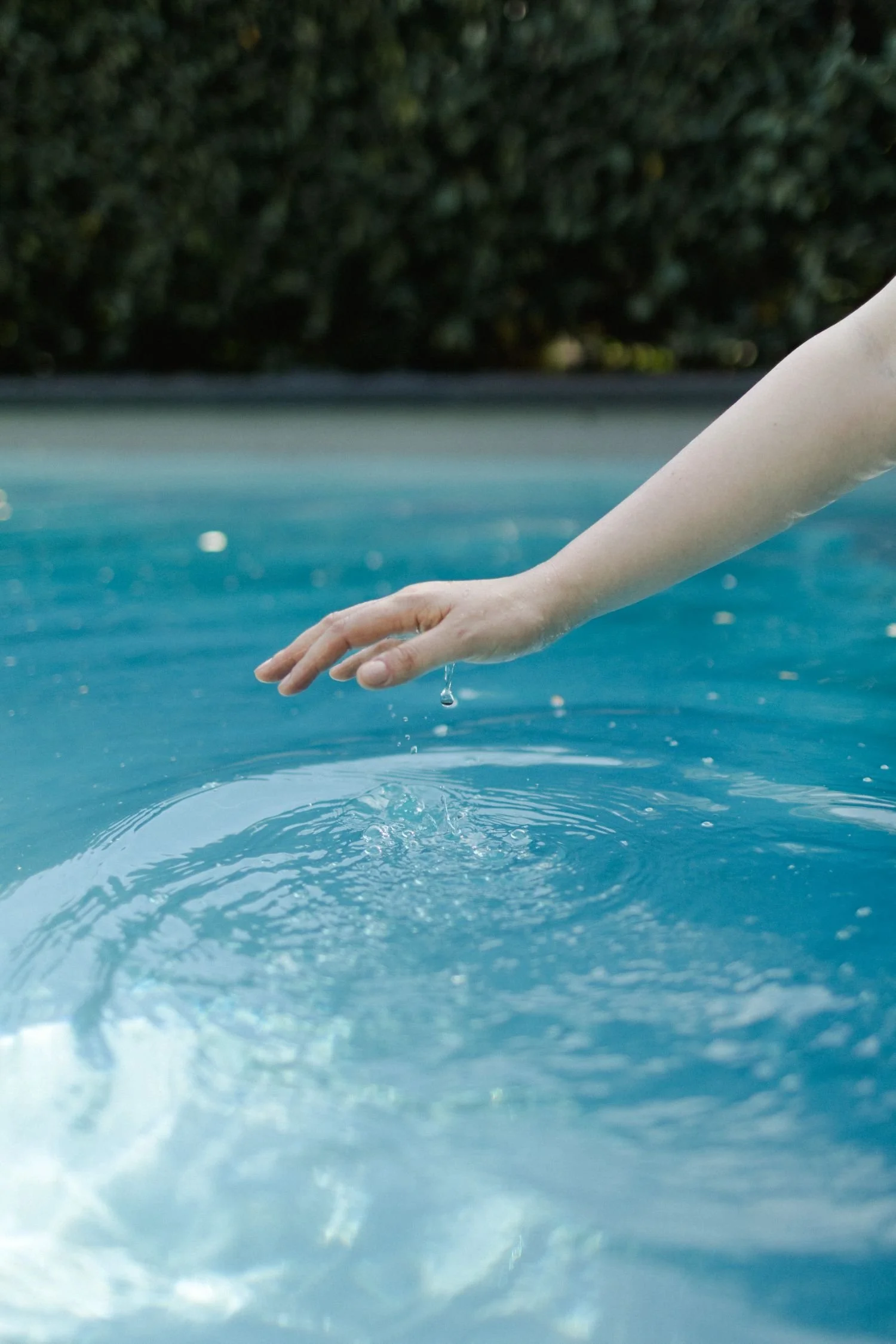
A swimming pool in a garden design project
The problem with pool-first thinking
Many homeowners come to garden design only after a pool has already been installed, and the pattern is a familiar one. The pool company has taken the best usable space in the plot: the flattest ground, the clearest sightlines, often the area closest to the house. What remains is whatever did not suit the pool.
The consequences show up in small but persistent frustrations. There is nowhere shaded to sit and actually watch the water. Seating has been squeezed into a leftover strip that catches full sun for most of the day. Privacy has not been considered at all, so the pool sits in full view of neighbouring properties or upper floor windows. Planting, if there is any, has been added around the edges rather than designed as part of the space.
One of the more common issues is the placement of outdoor kitchens and barbecue areas. It is not unusual to find them positioned beyond the pool itself, reachable only by a line of stepping stones across the water or around a tight, poorly finished edge. In practice, this means carrying hot food and drinks across a wet, slippery surface, often in the dark, often with children or guests nearby. It looks reasonable on a plan. It is genuinely impractical, and at times dangerous, in daily use.
None of this happens because pool companies are careless. It happens because a pool is a specialist product, engineered and sold as a standalone item, rather than as one part of a wider garden design.
“A pool contractor is not the person to trust with designing your garden”
Designing the pool as a part of the garden, not apart from it
The alternative is to start with the garden as a whole and let the pool take its place within that plan, rather than the other way round.
This means considering the plot size and house orientation before a single line is drawn for the pool itself. Where does the sun fall across the garden at different times of day? Where is shade needed most, and when? How does the household move between the house and the garden, and where do people naturally want to sit, eat and gather? Once these questions have been answered, the pool can be positioned to work with the space rather than dominate it.
A well-designed Dubai garden treats the pool, the seating areas, the shade structures, the planting and the circulation routes as a single composition. Each element supports the others. Shade falls where people actually sit. Screening is placed where privacy matters most, whether that is from neighbouring homes or simply to create a more enclosed, restful feeling within the garden itself. Outdoor kitchens and dining areas sit close to the house or within easy, level reach of the pool, not across it.
This is design thinking applied to a very specific and often overlooked problem: not what does the pool look like, but how does the whole garden work together, with the pool as one part of that experience.
Shade is not an afterthought
In Dubai's climate, shade is not a decorative addition. It determines whether a garden is usable for most of the year.
A pool positioned without regard for shade often becomes a space that is only comfortable to use very early in the morning or after sunset. Seating areas placed as an afterthought frequently end up in the most exposed part of the plot, because that is simply what was left once the pool had taken the prime position.
When shade is considered from the outset, alongside the pool rather than after it, it becomes possible to create seating and gathering areas that genuinely work throughout the day. Pergolas, planting, architectural screening and the orientation of the pool itself can all be used together to manage sun exposure, rather than relying on a single umbrella positioned wherever there happens to be room (or worse still, netting).
Screening and privacy around the pool
Privacy is one of the most frequently overlooked considerations in pool-first design. A pool positioned purely for space efficiency often ends up overlooked from neighbouring properties, upper floor windows or the street, with no planting, walling or structural screening built into the plan to address it.
Screening should be considered at the same time as the pool's position and size, not introduced afterwards as a row of pots along a boundary. Planting, architectural walls, timber or aluminium screens and changes in level can all be used to create a sense of enclosure around a pool, so that it feels like a private, considered space rather than an exposed water feature in the middle of the garden.
Flow, seating and the areas around the water
A pool is rarely used in isolation. People move to and from it, sit near it, eat beside it and pass through the space around it throughout the day. How that movement works is just as important as the pool itself.
Seating should be positioned where it will actually be used: within reach of shade, close enough to the water to feel connected to it, and easy to move to and from without crossing awkward or slippery surfaces. Outdoor kitchens and dining areas need to sit on a direct, level route from the house, not across stepping stones or around the far side of the pool. Circulation through the garden should feel natural, allowing people to move between the house, the pool, the seating and the planting without obstacles or detours.
This is where plot size and house orientation become genuinely important considerations, rather than simply practical constraints to work around. A smaller plot may require a more compact pool and a tighter, more carefully edited layout, where every metre has a clear purpose. A larger plot allows more separation between zones, but still needs a clear structure so the space does not feel disconnected. House orientation determines where morning and afternoon sun falls, which in turn shapes where the pool, the shade and the seating should sit in relation to one another.
Planting around a pool should do more than decorate the edge
Planting is often the last thing added to a pool-first garden, used simply to soften hard edges once everything else has already been built. When planting is considered as part of the whole design from the beginning, it can do far more than decorate.
Planting can be used to create shade, to reinforce privacy and screening, to frame views towards or away from the pool, and to connect the water to the rest of the garden rather than leaving it feeling like a separate, tiled feature. In a well-considered Dubai garden, planting and pool sit within the same design language, chosen and positioned together rather than treated as two unrelated projects.
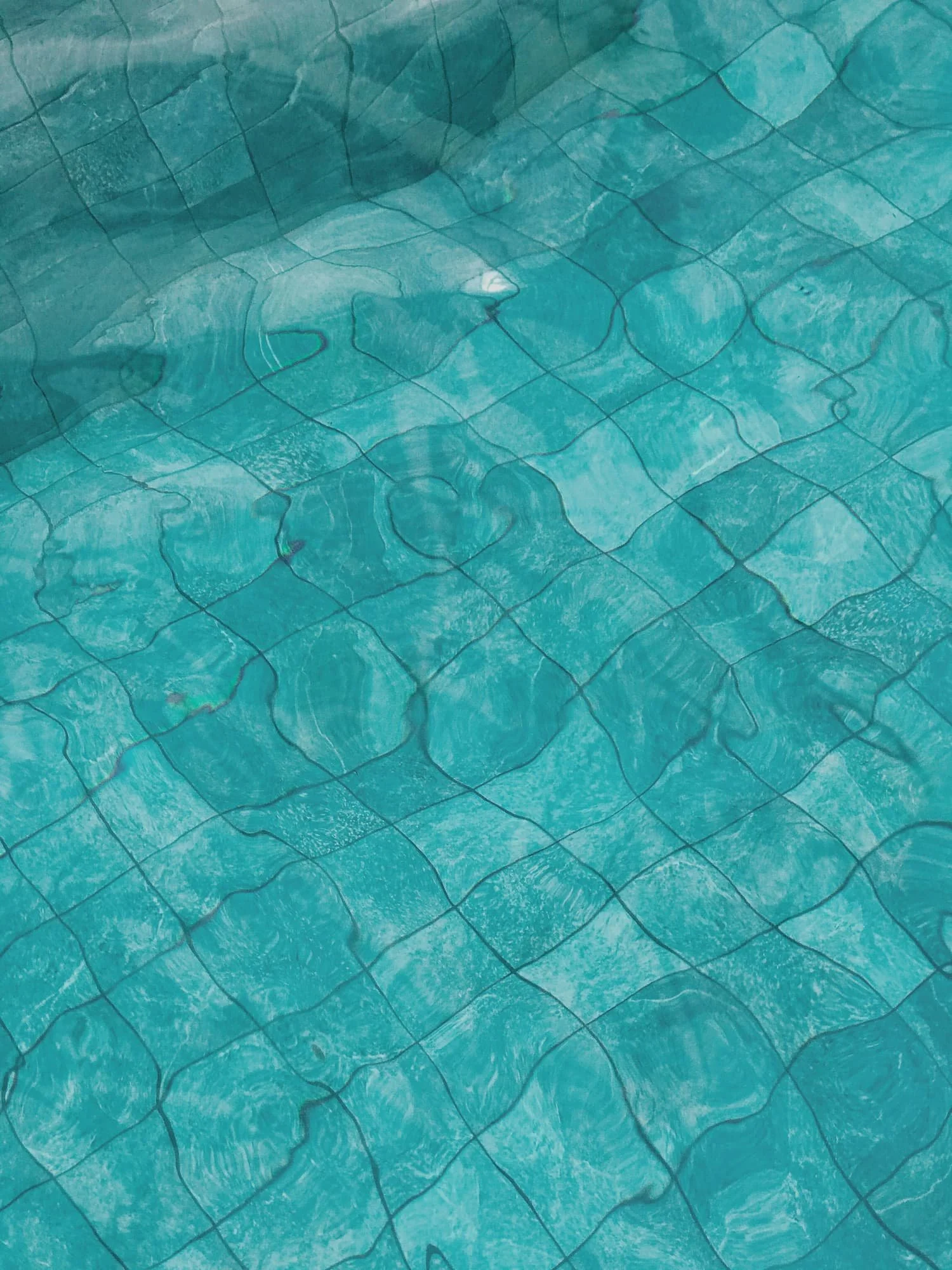
Ripples over the swimming pool
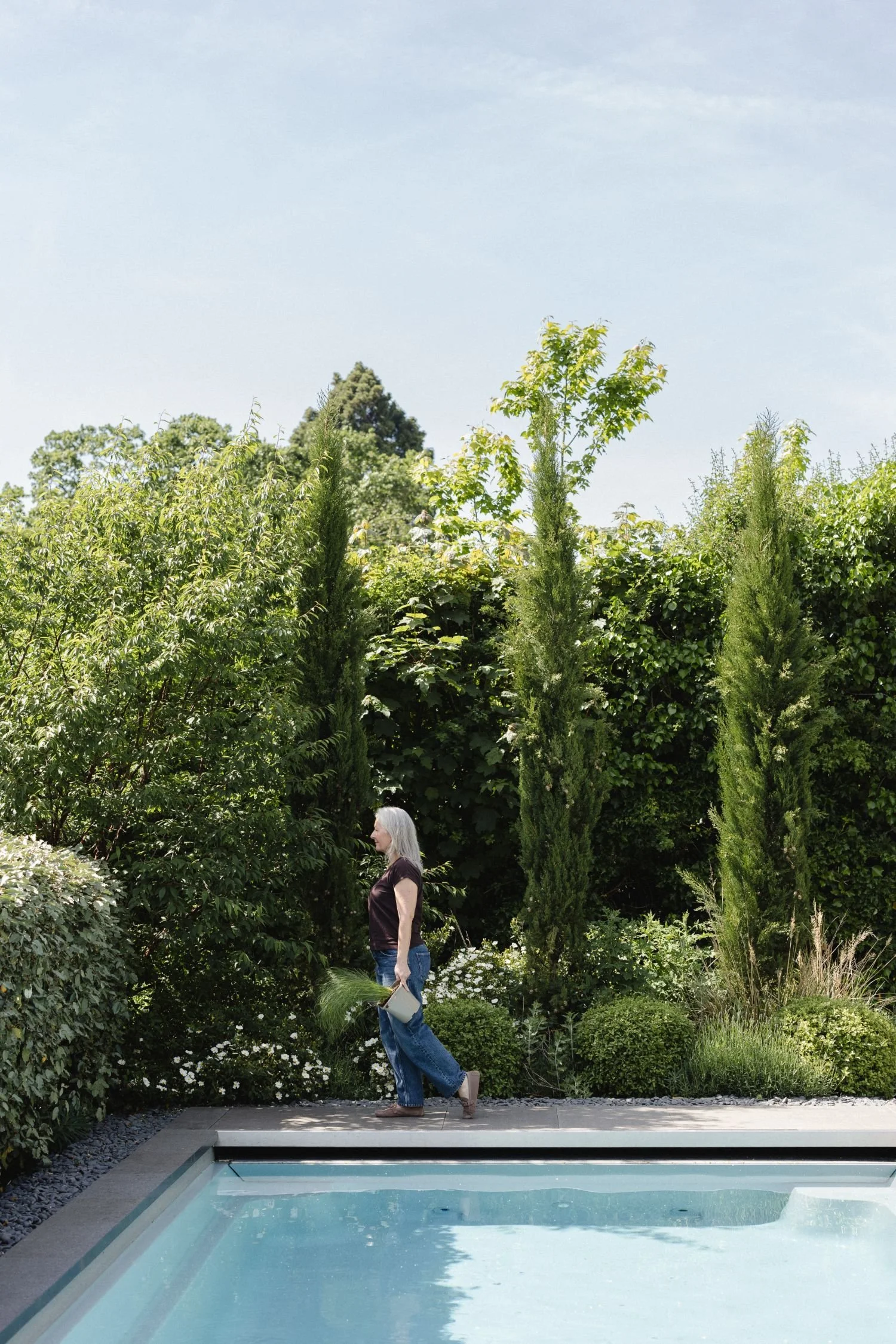
Tanja setting out plants next to the pool
A final thought on pool design in Dubai
A pool should be one of the most enjoyable parts of a garden, not the reason the rest of the space fails to work.
When a pool is designed first, in isolation, the garden that follows is usually a series of compromises: seating in the wrong place, no meaningful shade, poor privacy and, at times, genuinely impractical or unsafe routes between key areas. When the pool is instead designed as part of a coherent garden plan, considered alongside shade, screening, seating, planting and flow from the very beginning, the result is a space that works as a whole.
The right approach is not simply to build a beautiful pool. It is to design a garden in which the pool has its place, in proportion to the plot, in harmony with the house and genuinely built around the way the household lives outdoors.
About Gardens by Design
Gardens by Design: pool and garden design in Dubai
Tanja Boehm and the team at Gardens by Design take a garden-first approach to every project, including those built around a swimming pool. Rather than treating the pool as a standalone product to be fitted into whatever space remains, shade, planting, seating, screening and flow are all considered together from the outset, in relation to plot size and house orientation. Based in Motorcity and working across Dubai, the studio has applied this approach to more than 130 gardens over the past decade. If your own pool was installed before the rest of the garden was ever considered, it is not too late to bring the space together as a whole.